 Hanji
Workspace insights
Open Activity from the workspace title bar. It belongs to the workspace, so opening it does not switch you through Document or require Document to be on. Return to the product you were using when you are ready.
The page opens a usable shell first, then loads the scoped history. A first visit can take longer while repositories are read. Loading has a visible state, a bounded wait and a retry action; later visits generally reuse warm data. Refresh requests current history without replacing the document or losing your filters.
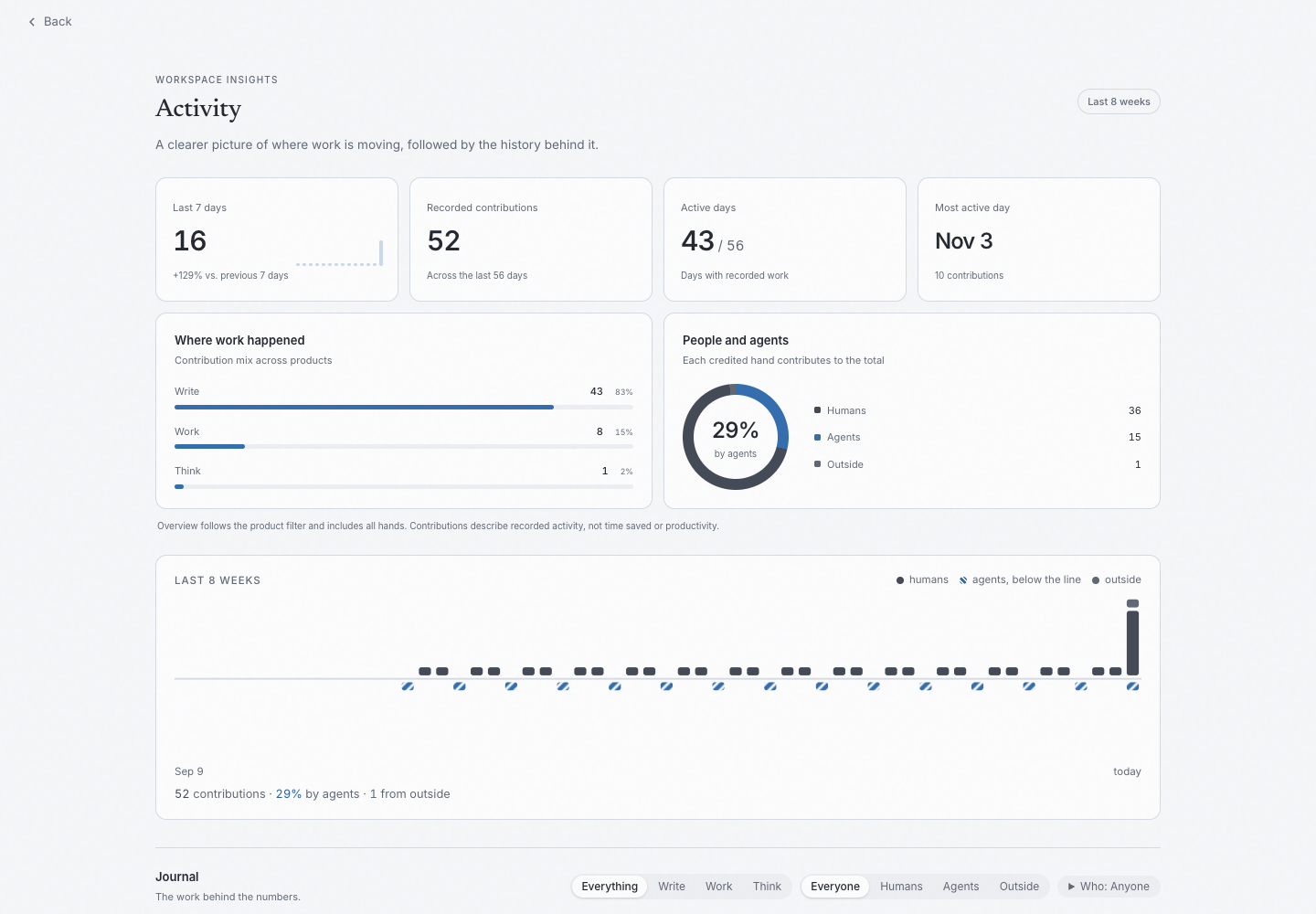
Read the overview
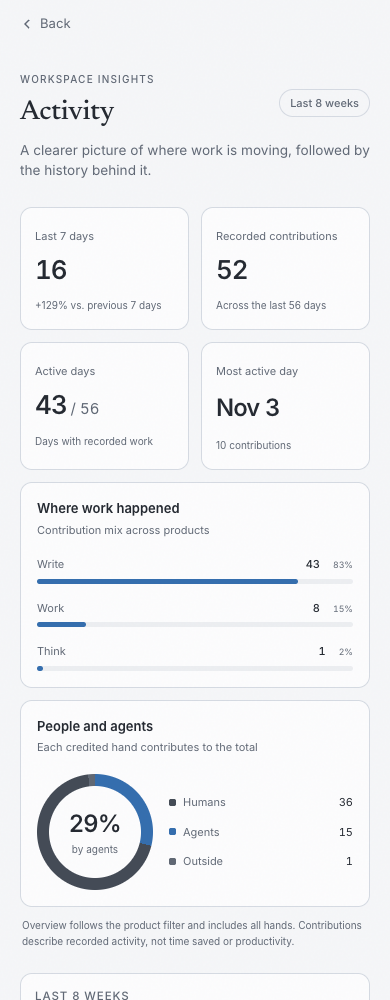
The overview combines recorded contributions, a seven-day comparison, active days and the busiest day. Product bars show where activity happened, and the human/agent split shows the recorded attribution. A chart describes contributions in the journal, not hours worked, time saved or a productivity score. A quiet chart can mean unrecorded work, not inactivity.
Click a product to narrow the journal. Product, person and human/agent filters are bookmarkable. Filtering and browser Back update the same page. When a history read is capped, the interface says so; a partial count is not presented as a complete history.
Follow the journal
Entries group by day and describe changes in documents, issues and canvases, alongside recorded agent work. Runs and sessions can fold related actions into one readable entry. Follow an entry to the work it describes; choose Older to continue through history. The overview and the journal serve different scales: a recent pattern above, the events behind it below.
Each row is scoped to what you can read. A workspace-wide view does not grant access to another person’s private pages, trackers or canvases. Journal responses are private and are not a public feed or part of a static documentation export.
See The conductor for the agent conversation and Permissions for the access model behind the journal.