01 · The agent contributes
A focused request carries the issue, discussion and relevant project context. The configured agent can clarify the task, suggest follow-up work and return a response attached to the issue.
Plan · Alpha
 Hanji✳
I’ll connect an outline, invitation, feedback, and publishing.
PlanCanvasKeep the outline to three steps.
“Introduce, invite, then learn.”
✓ Task completeAdd a warmer opening.
“Welcome to Fieldnotes. Come try it.”
✓ Task completeMake the question more specific.
“What felt unclear on your first try?”
✓ Task completeAdd a final review before publishing.
“A final review now comes before publishing.”
✓ Task completePlan · A collaboration example
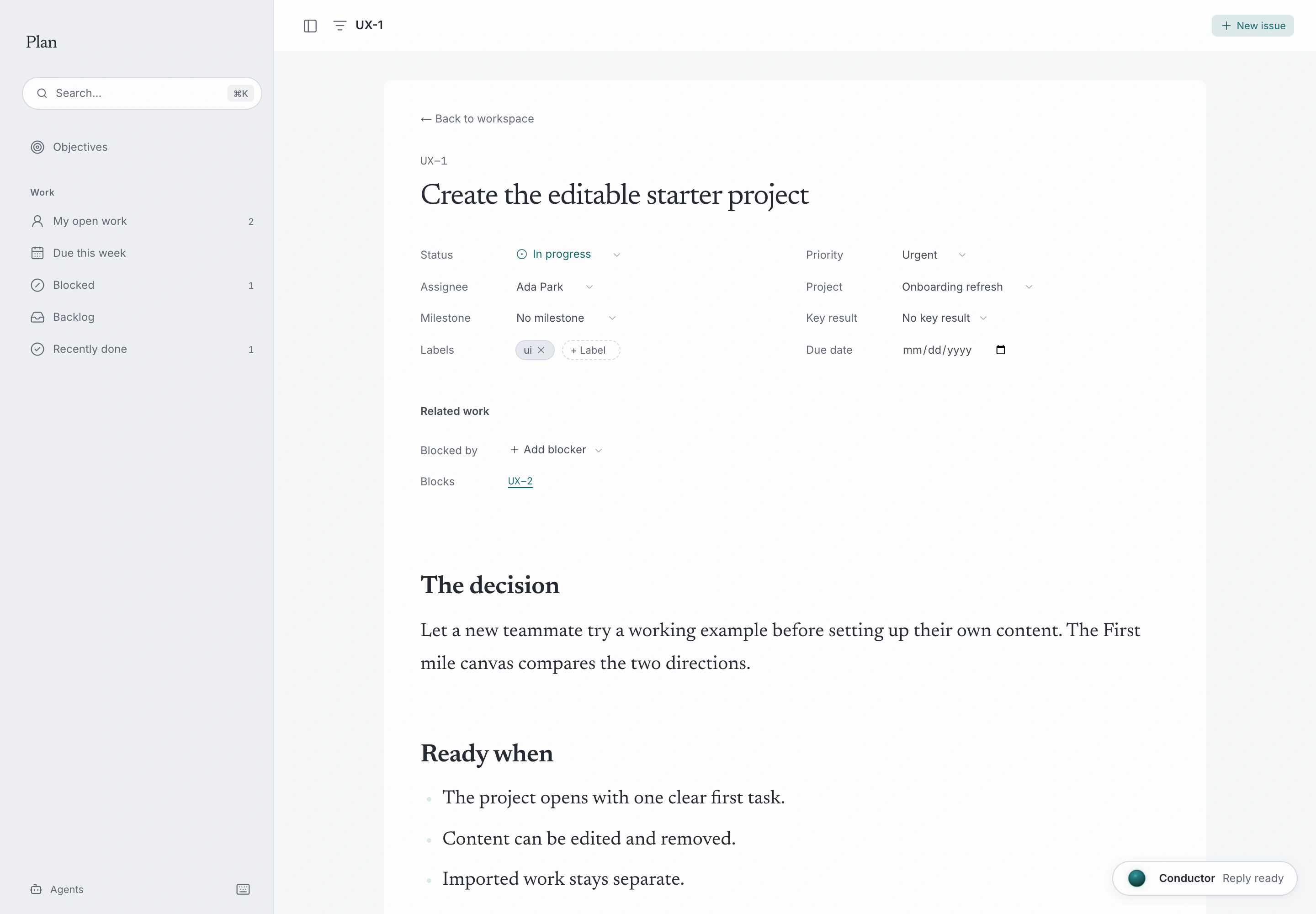
The team has chosen an editable starter project. Ada opens the issue in Plan and asks for help making the work precise before committing to it.
@claude clarify the acceptance criteria for this task and suggest a follow-up to test the first session.
01 · The agent contributes
A focused request carries the issue, discussion and relevant project context. The configured agent can clarify the task, suggest follow-up work and return a response attached to the issue.
02 · You review and decide
Ada reviews the criteria, decides what belongs in scope and assigns the review. The conductor can then help answer the wider question: what does this change for the rest of the project?
The resultA task with checkable criteria, an owner and a clear way to review the result.
Request access
The Mac desktop preview is shared by invitation. Public binary downloads are not available yet. AI is optional; your provider account is managed separately.
Opens our contact form on FormSubmit.
We’ll use your details to reply to this request. Submissions are processed by FormSubmit.
An existing checkout containing Plan, recent Node.js, pnpm 9.15, Git, and a C build toolchain for SQLite. You can create and browse tasks without a model account.
From the checkout, create a fresh workspace, then a project and its first task. Keep this terminal’s workspace variable when starting the web app.
pnpm install
pnpm tracker init ../fieldnotes --name Fieldnotes --prefix LAB --owner ada
export TRACKER_WORKSPACE="$(cd ../fieldnotes && pwd)"
pnpm tracker project new fieldnotes --title Fieldnotes
pnpm tracker new "Draft the invitation" --project fieldnotes
pnpm dev:tracker-webName your workspace, choose your products and start fresh. Hanji prepares the folders. Prefer your existing content? Connect it during setup or later.
The conductor is a standing conversation across all three products. Bring the page, issue or selected canvas objects into context; review requested changes and use Undo when available. Connect your own Claude or Codex setup.
One workspace, three views
Use the list to review details, the board to track status, and the canvas to understand dependencies. All three views reflect the same issues.
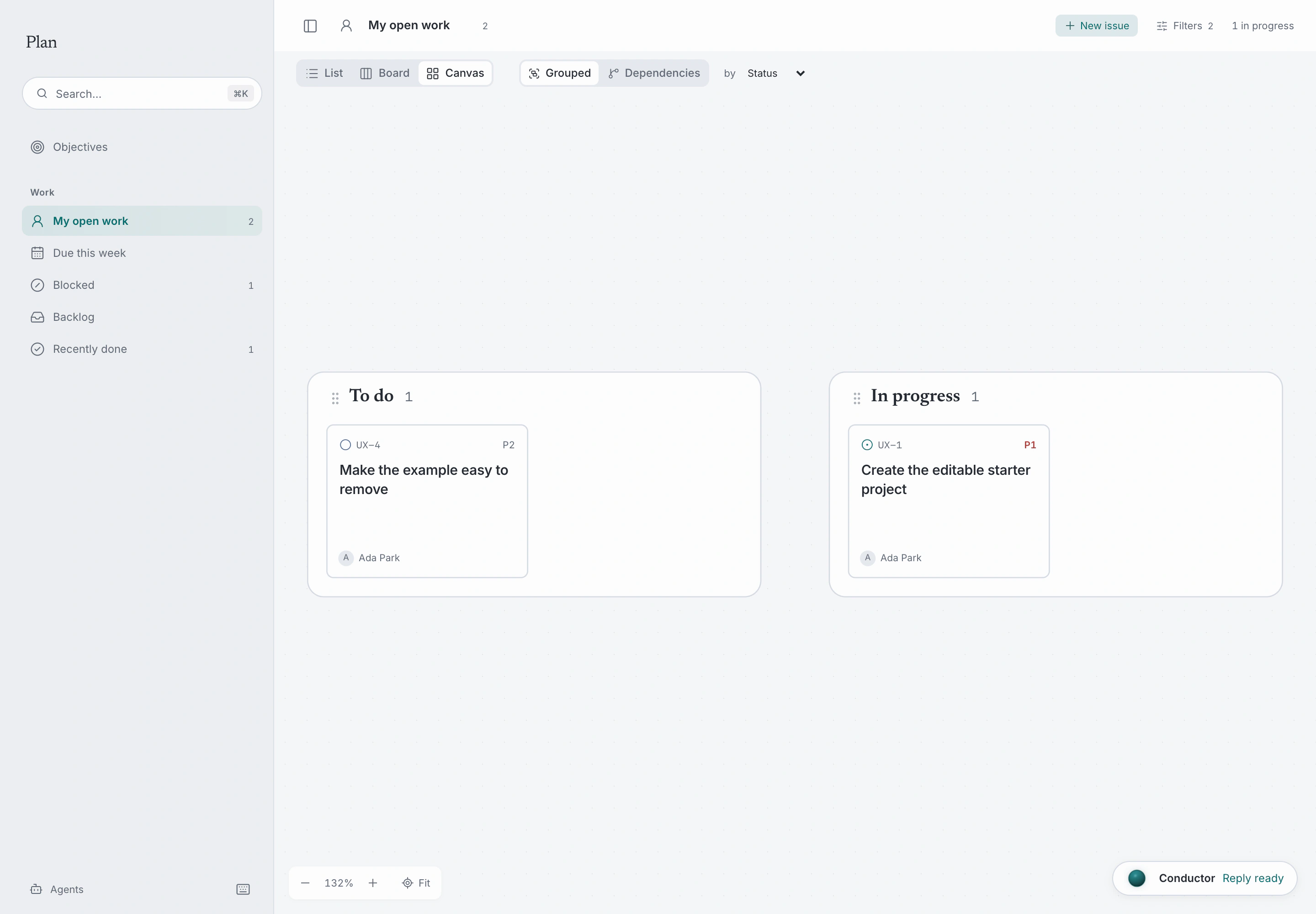 Screenshot previewPlan — Actual preview interface · fictional workspace · English UIOpen the image to view full size.
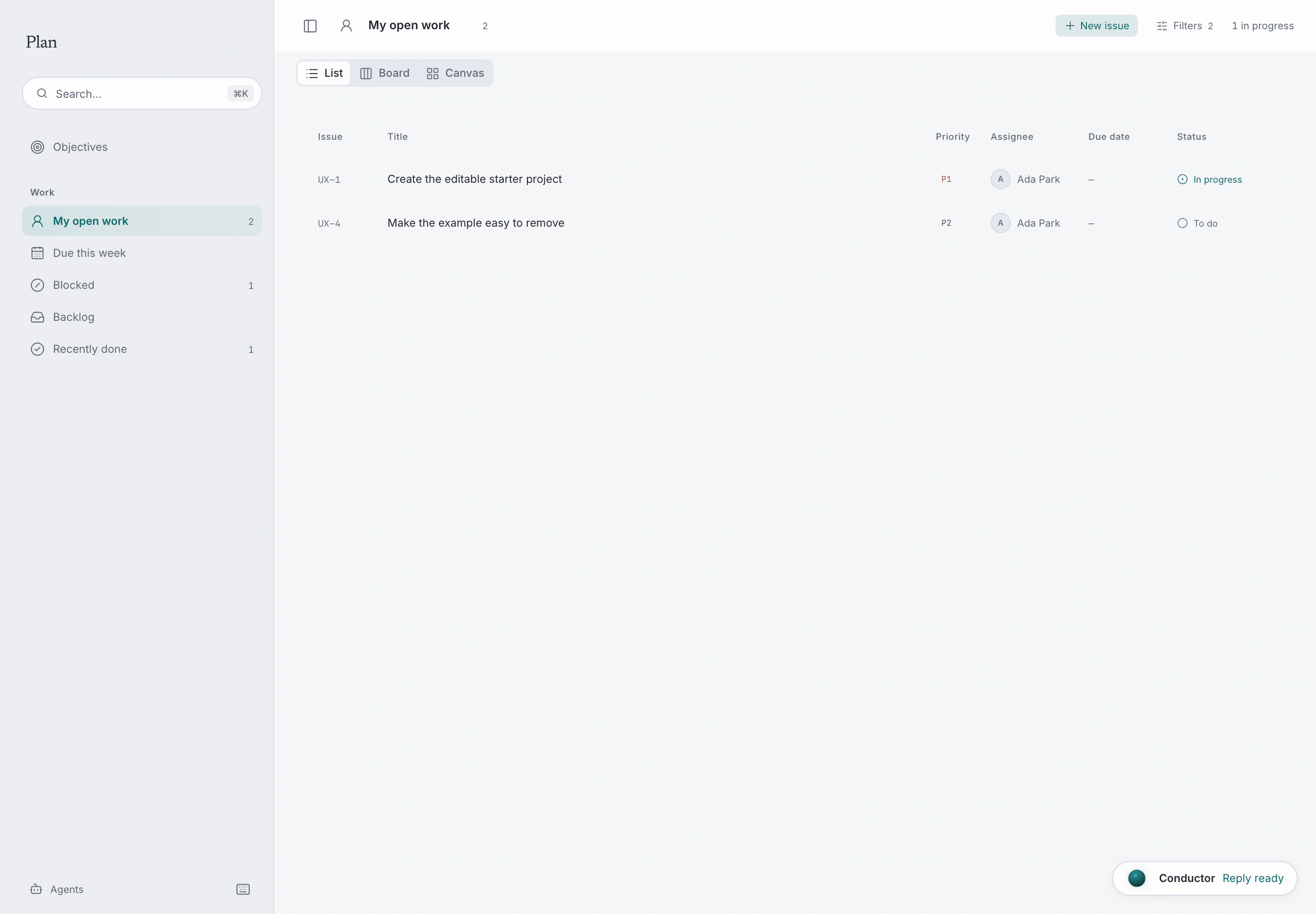 Screenshot previewPlan — Actual preview interface · fictional workspace · English UIOpen the image to view full size.
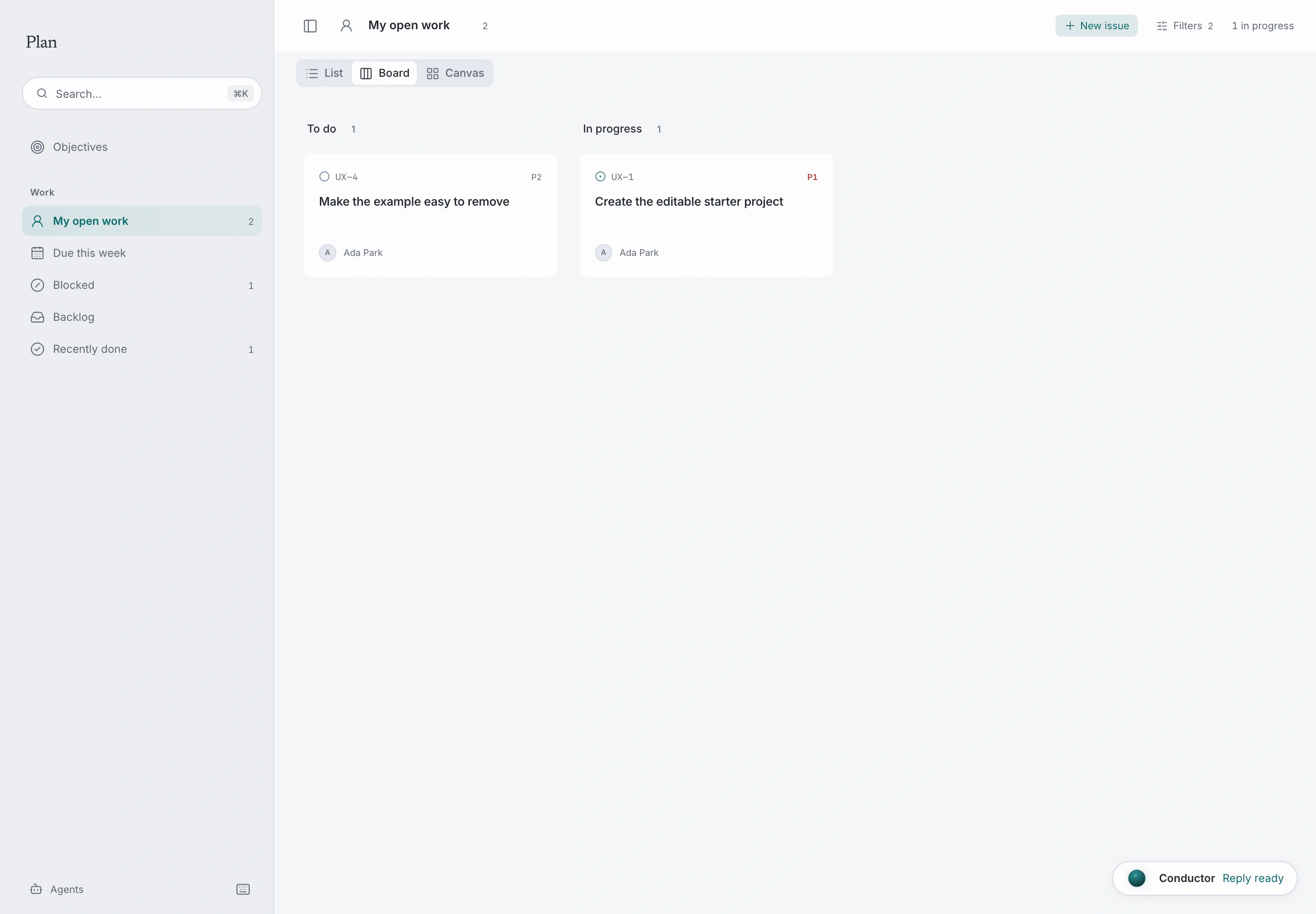 Screenshot previewPlan — Actual preview interface · fictional workspace · English UIOpen the image to view full size.
Pan and zoom through grouped project territories or dependency lanes. Trace a direct link or a whole chain, pin what matters, and fit that chain into view. Parent–child relationships and blockers remain distinct.
Open an issue alongside the work. Set its owner, status, milestone, or due date; add a comment or adjust a dependency. Saved views, filters, sortable lists, and keyboard navigation help you return to the work that matters.
People, agents, and the conversation
Discuss a specific issue or start a conversation about the workspace. Address a configured Claude or Codex agent directly, with the relevant work in context.
Developer builds include ongoing Claude and Codex sessions, with permission prompts and controls to stop or continue work. These workflows are still being validated with live agents.
Example conversation with fictional participants; no live agent run.
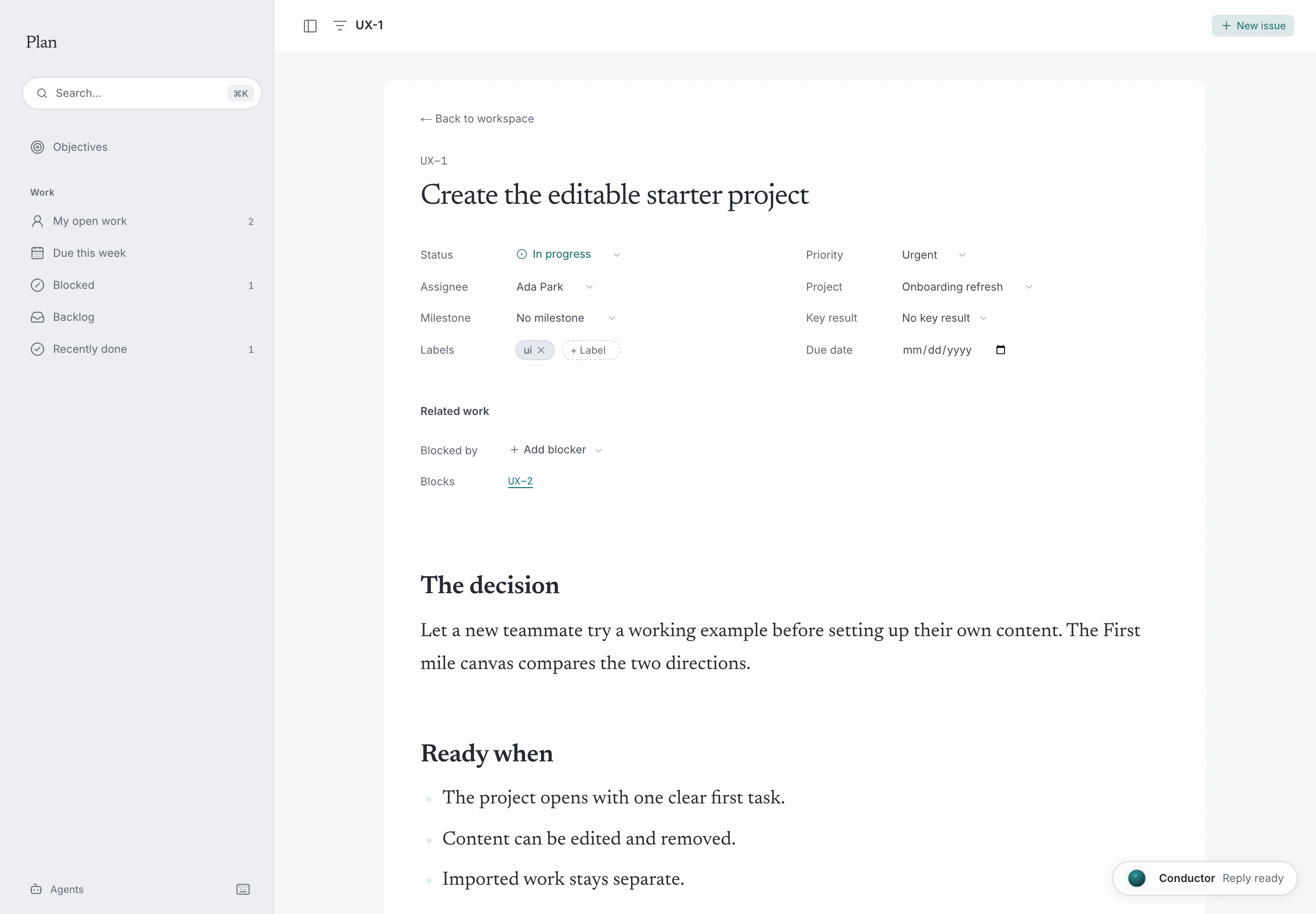 Screenshot previewPlan — Actual preview interface · fictional workspace · English UIOpen the image to view full size.
Projects, milestones, objectives
Assign project leads, define milestones, and connect issues to key results. Review progress alongside the objectives it supports.
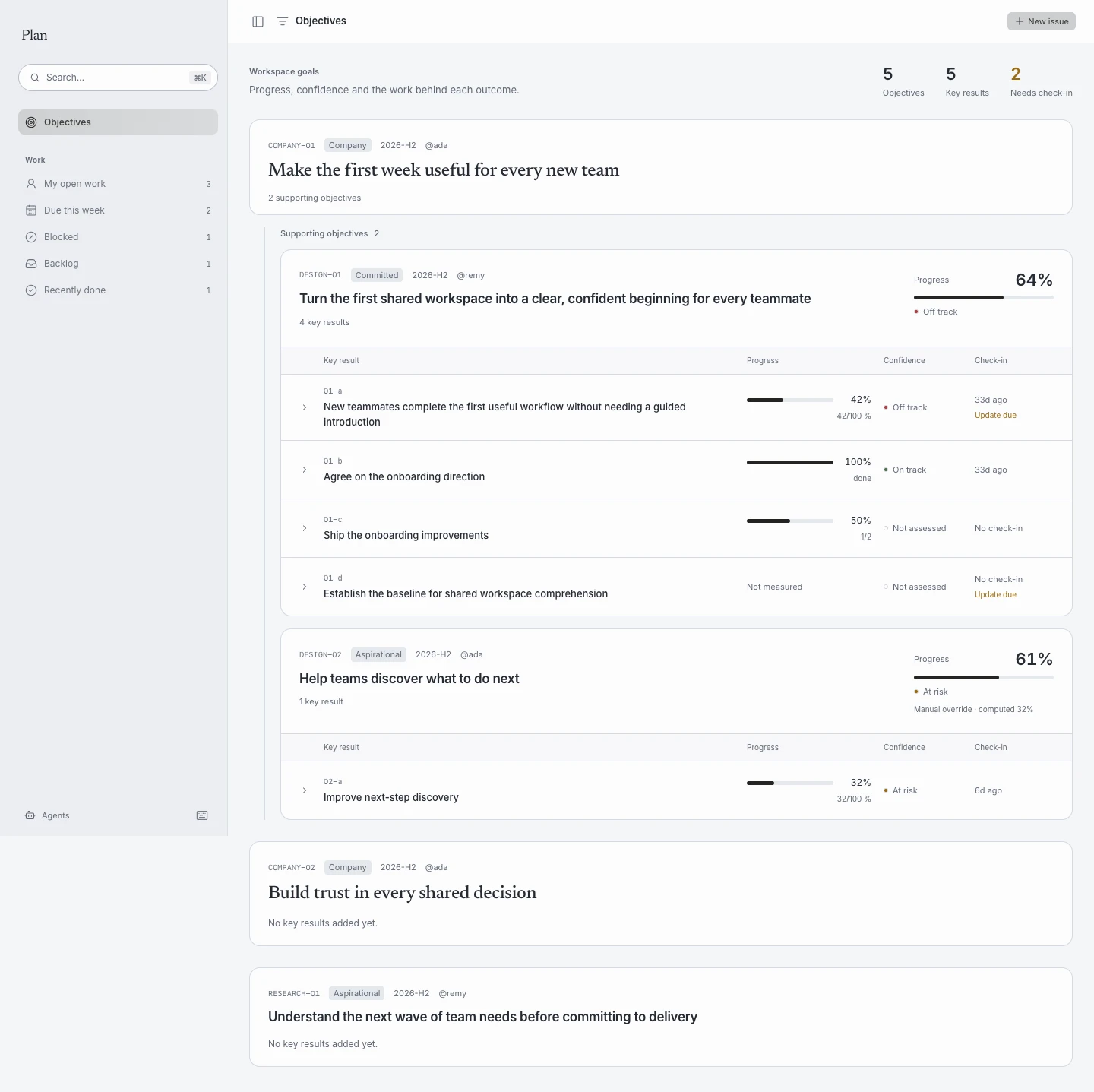 Screenshot previewPlan — Actual preview interface · fictional workspace · English UIOpen the image to view full size.
Milestones live in project documents. Linked issues supply their progress, while dates make overdue work visible. Group the canvas around a project, person, milestone, or key result.
Track metrics, completion, binary results, and rollups. Record check-ins with confidence and a note, so the reason behind a number stays visible too.
Files at the foundation
Issues, projects, and posted comments use Markdown. Saved views use YAML. Session state and live events are stored in a local database.
The web interface, CLI, and MCP tools share the same core. Changes made through the CLI or MCP are attributed in Git. What an agent can change depends on the workflow and its permissions.
fieldnotes/
  issues/
    LAB-1.md
  projects/
    fieldnotes.md
  objectives/
    o1.md
  threads/
  views/
    launch.yml
  workspace.yml
Everyday workflow
Practical tools for navigating, organizing, and reviewing work.
Saved YAML views with names and icons. Search, persistent list sorting, and a command menu. Use J/K to move, Enter to open, V to change layout, and ? to see the available shortcuts.
Create and edit projects, capture an idea, and update groups of issues. Assign an owner, priority, labels, due date, milestone, and key result without creating another source of truth.
Canvas chains can reveal prerequisites outside the current view and mark cycles. The CLI’s review command groups work for a weekly review; lint flags things such as stale asks and changed or missing sources.
The products share your workspace identity, people, primary color and conductor. Each surface keeps the tools that fit the work.
Alpha
The Mac desktop preview is shared by invitation. Public binary downloads are not available yet. AI is optional; your provider account is managed separately.
Both Hanji projects use the AGPL-3.0-only license. Public distribution and supported installation are not yet finalized. Hosted team workspaces, individual permissions, importers, and GitHub status synchronization are not currently supported. Build automation still requires live validation before use.
Request access